Buyers researching how to find a reliable bicycle OEM factory in China usually get the same generic answer: "check certificates and visit the factory". Both are correct, but neither tells you what actually happens to your order after you send it. This article walks through the complete workflow we run at DIMIK, an OEM bicycle manufacturer in Tianjin, for a typical branded program — using the same six steps you will find on our process page.
Step 1 — Inquiry and spec selection
You start from our catalog: six series, 93 models, from a 20-inch folding bike to a 29-inch alloy mountain bike. Each model carries a 16-item specification sheet — frame material, fork, shifter, derailleurs, chainset, freewheel, chain, brakes, rims, tyres and more. You pick the closest platform and tell us your target market and price point. For example, a European distributor might start from model BRT21M1007, our 29-inch alloy MTB, and ask for a lower-spec drivetrain to hit a retail price.
Step 2 — Quotation with a written spec sheet
Within one working day we return a written quotation tied to the exact 16-item spec, so you know precisely what is priced: no surprises at the deposit stage. MOQ is confirmed per model at this point, because it depends on the series and the level of customization. Everything is documented — the spec sheet you receive is the spec sheet the production line builds.
Step 3 — Sample confirmation
Before mass production, a sample is built with your chosen configuration. This is where your brand decisions land: frame colour, decals, saddle branding and carton design. Once you approve the sample — photos and video are fine for most programs — it becomes the golden sample the line is checked against.
Step 4 — Deposit and mass production
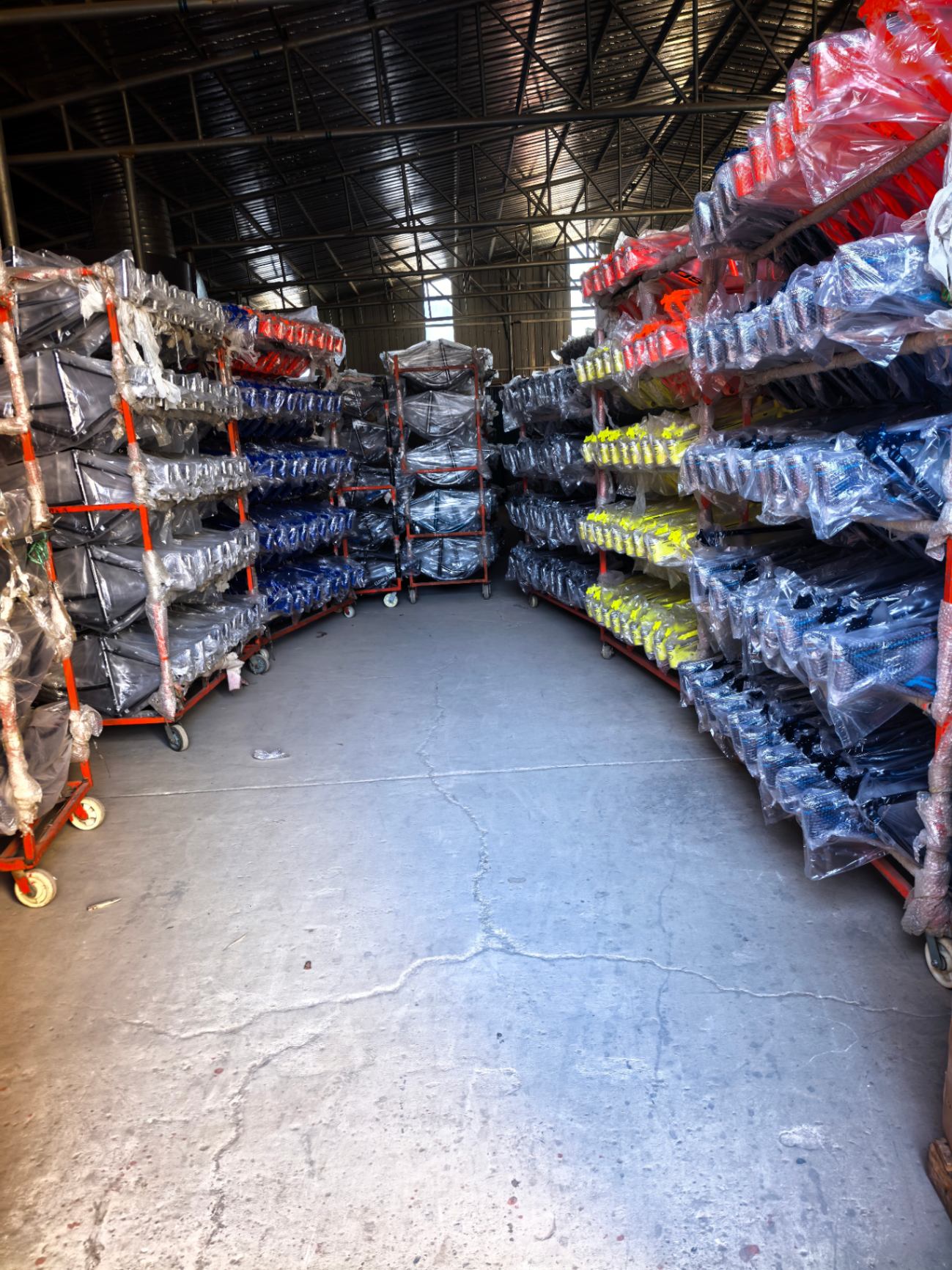
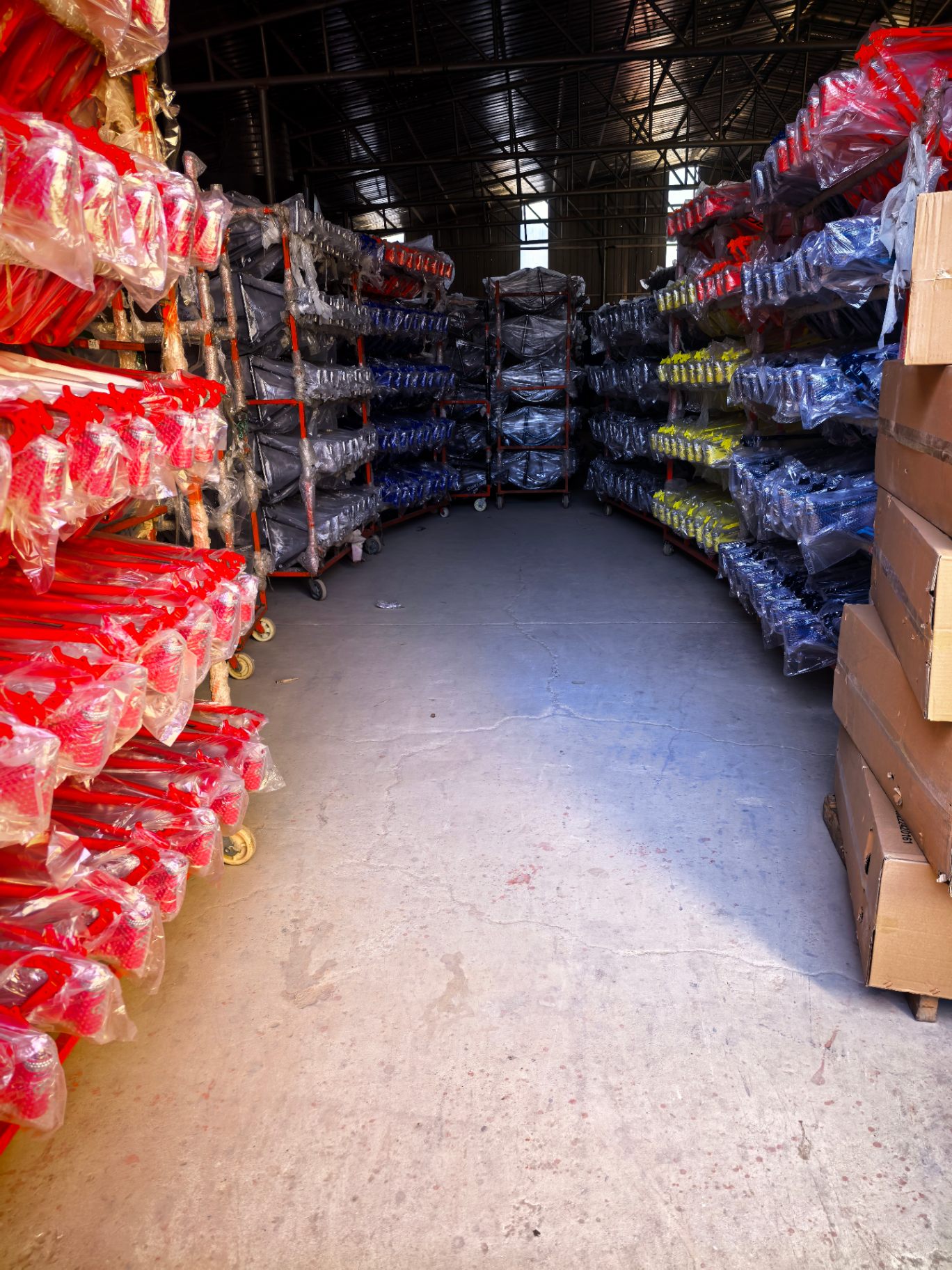
Production follows the same sequence for every series: tube cutting, frame welding, painting and decals, then final assembly. The photos on our factory page are taken on this floor — the same lines build your order, whether it is a suspension series run or a mixed container of city and folding bikes.
Step 5 — Inspection: in-line, pre-packing, AQL
Quality control runs at three points: on-line inspection during welding and assembly, a pre-packing check against the golden sample, and AQL sampling before the cartons are sealed. Photo evidence is available with every shipment. Our platforms are engineered to EN ISO 4210 and destination-market requirements, and QC documentation is part of every program.
Step 6 — Export packing and shipment from Tianjin
Finished bikes are protection-wrapped, packed into your printed export cartons and palletized. From here the order ships via Tianjin Xingang port on EXW, FOB or CIF terms — full container or LCL, and mixed-series loading is normal for us. You receive the packing list, photos and shipping documents with the booking.
What this means for your first order
The whole sequence — RFQ to loaded container — is designed so that you approve every specification in writing before a single frame is welded. That is the practical answer to "how does the bike OEM process from a China factory work": documented specs, a golden sample, staged inspections and factory-direct communication at each step.
Want this workflow on your brand?
Send your series, market and quantity — we reply within one working day with the matching spec sheet.